Welcome to my blog about sailing AMALIE, a Catana Ocean Class which we purchased in France in 2023.
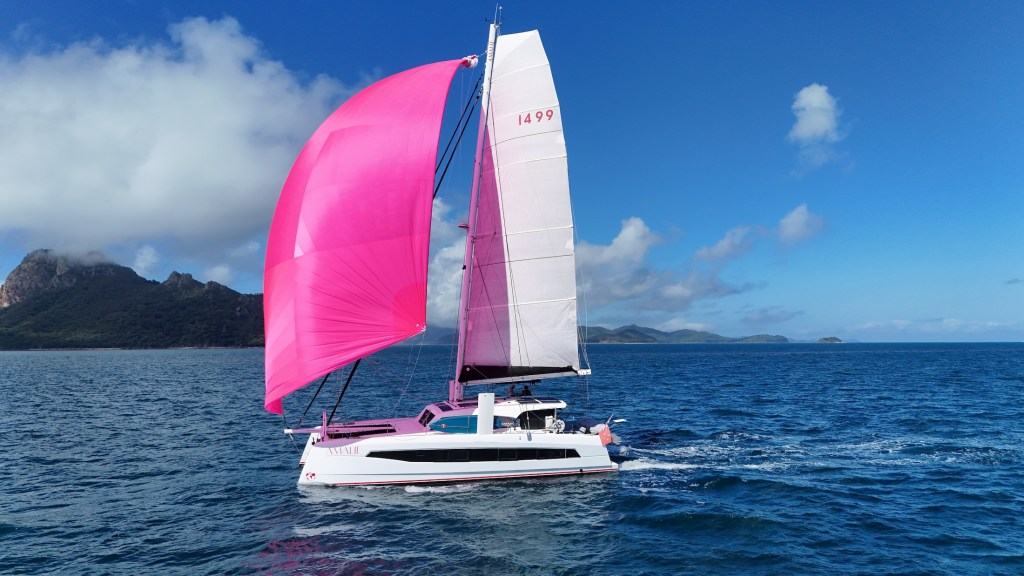
We have been sailing her extensively ever since. First a shakedown cruise on the East coast of Australia, then a botched rally to New Caledonia which ended up in Vanuatu because of social unrest in Noumea and gave us a taste for exploring the South Pacific islands.
Last year we sailed from Sydney to the top end of New Zealand and embarked on a eight month trip visiting Tonga, Fiji, Vanuatu and New Caledonia.
If you look below you will see the different articles I have written about our adventures. Have patience because I haven’t learned all the tricks about blogging yet!
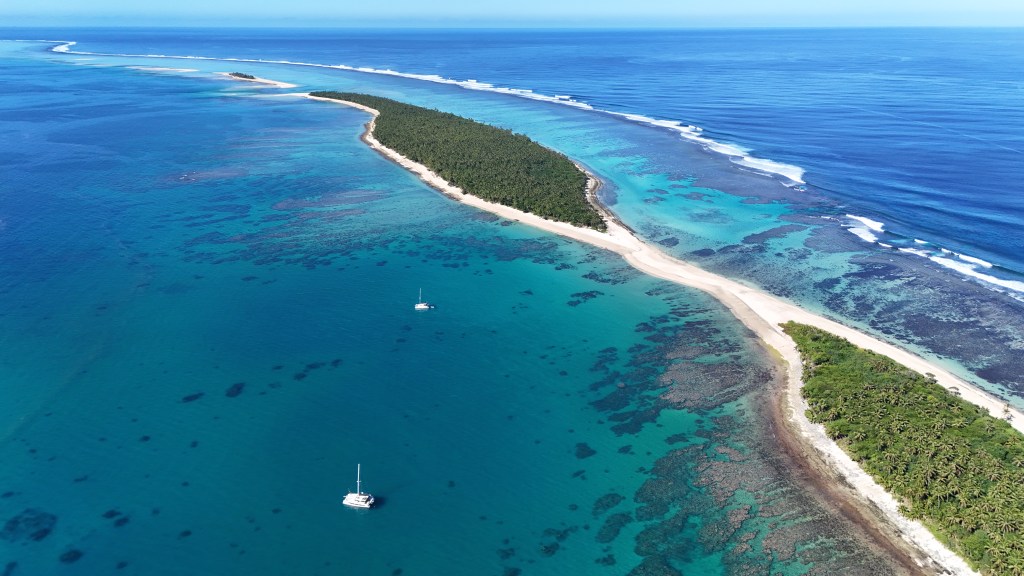
Fiji
The Friendly Isles
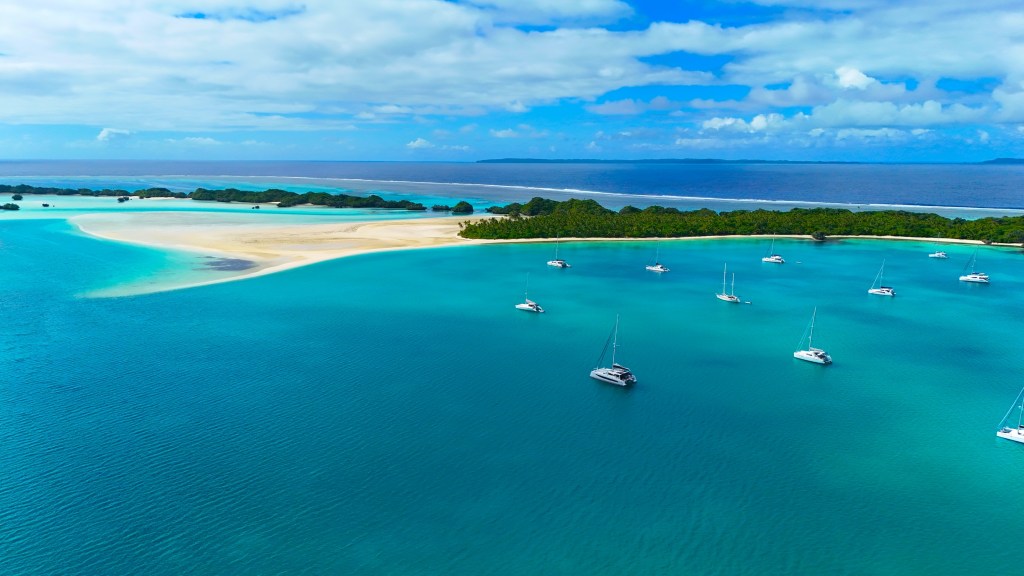
The path through the jungle was hardly visible and my ancle kept twisting on the uneven limestone rubble. The anchorage was no longer in sight this far inland, and the pleasant breeze had been replaced by a sticky humidity. Suddenly our guide stopped and held his hand up before he waved us closer.
Zeta’s large, athletic body disappeared into a crack between two boulders. We followed him down into the musty smelling void. As soon as my eyes got used to the dark, I looked around. We were in a large cave. All around us on the floor and resting on ledges and crannies were dozens of bones and skulls. We had landed in what looked like an ancient burial site on a remote island in the South Pacific, but who were they? Friend or foe? Had they been buried here or simply forgotten, were they prisoners of war or were they the remains of a giant feast with human flesh on the menu?
We were in Fiji, in the most southern island of the Lau Group right in the middle between Tonga and the main island of Fiji.
People still live and fish the traditional way here and you can only visit if you have a cruising permit obtained at one of the official check-in ports on the main islands (either in Savusavu, Port Denerau, Suva or Lautoka). Between 1992 and 2013, the Fijian Government did not allow any visits to these remote parts to protect them from outside influence and till this day only a small group of boats adventure out to the Lau every year. There are no regular provisioning boats from the main island so there are no shops or medical services readily available and no tourists other than those arriving on their own yacht.
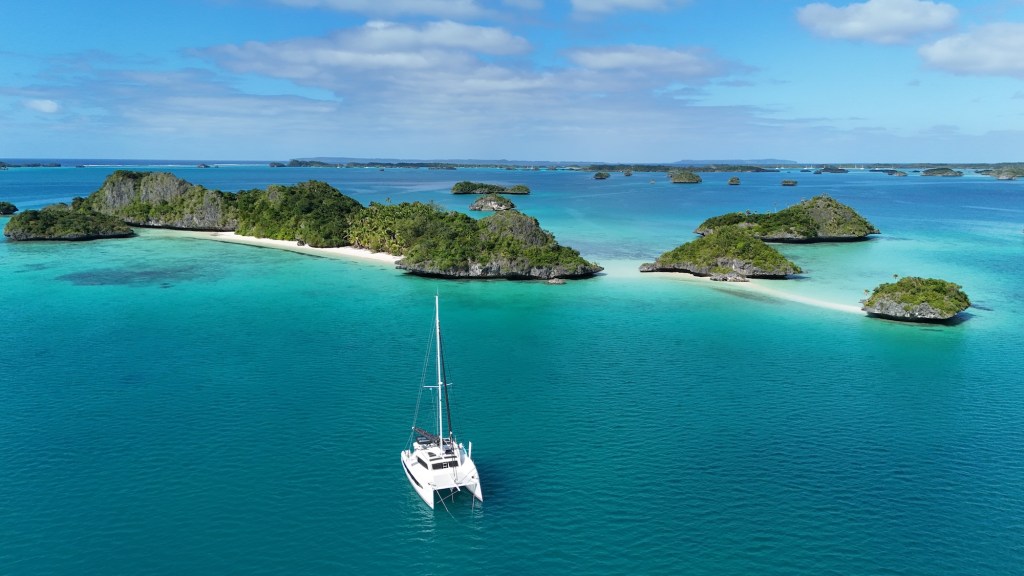
The island group is divided into the Northern and Southern Lau about 150 nm apart. Vanua Balavu, sometimes referred to as the Bay of Islands, is on route if you come from Tonga or French Polynesia but you are not allowed to stop and must sail another 80 nm to get to Savusavu for your official check in and your island cruising permit. The ARC fleet has special arrangements and can check in at Vanua Balavu because they pay for the officials to fly out to the Bay of Islands.
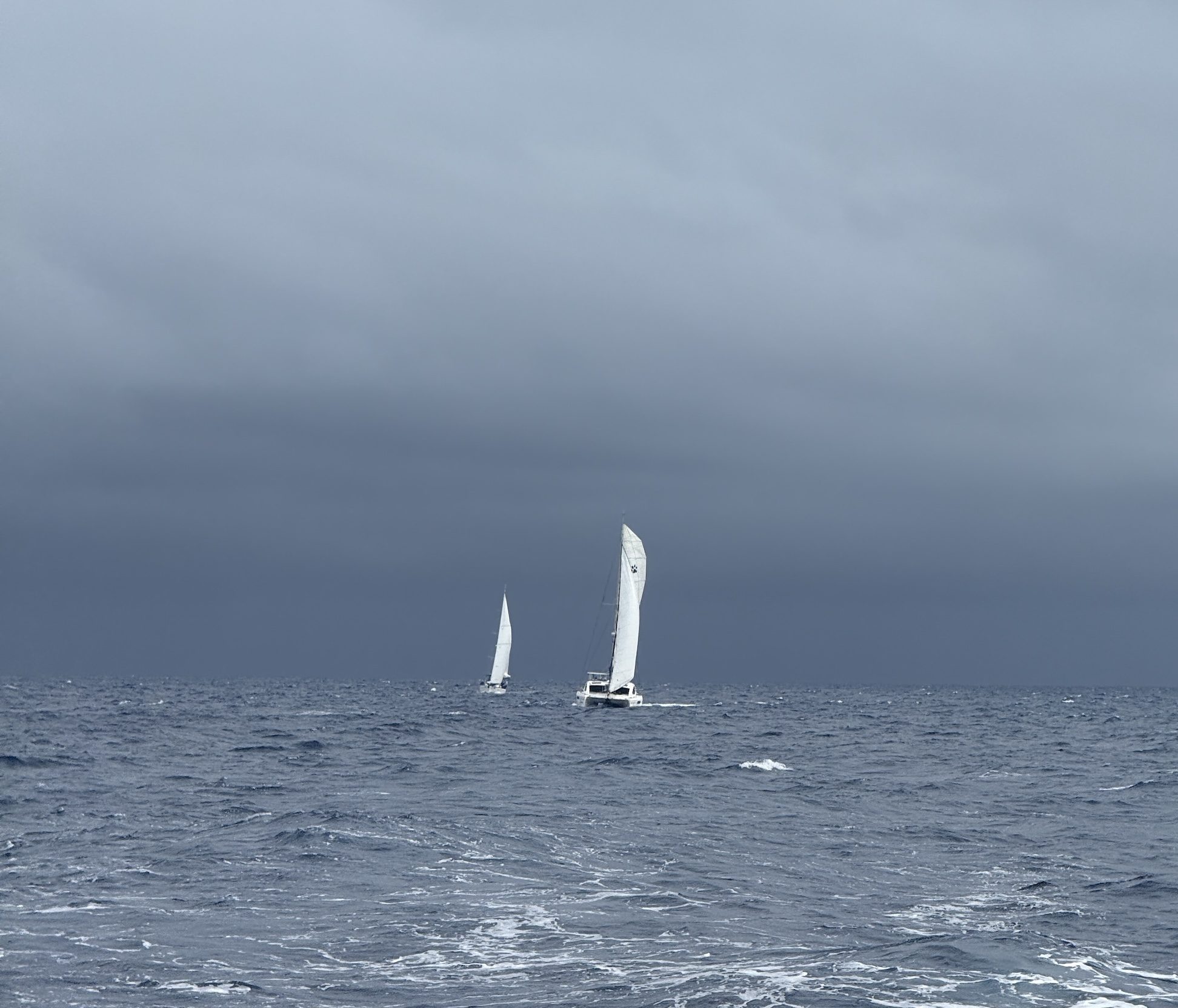
We sailed from Tonga to Savusavu. We had sailed east ever since we left Sydney. First to New Zealand, then northeast to Minerva Reef and all the way to Tonga crossing the 180th meridian so we were pleased to finally head west and sail downwind with the prevailing SE winds behind us. It was a rather boisterous sail between volcanos peaks and rain squalls, and we decided to slow right down and keep our friends on a smaller catamaran company. It was the first time they were doing a two-handed passage, so we reefed all our sails and stayed close all the 400 nm across. Which meant we arrived at our check-in port Savusavu after dark. Well aware that sailing in Fijian waters Navionics charts can’t be fully, I had corresponded with Nawi Marina and they assured me there would be a tender boat 24/7 at the entrance to the tiny creek to accompany us into the Q dock. But my incessant calls on the radio at two in the morning went unheard and before the adrenaline rush had even reached my stomach, my husband said. “We’re going in. Try to shine on the yellow buoys.” The creek is narrow and full of moored boats and a few scattered unlit navigation aids but somehow, we made it to the dock. Our New Zealand friends tied up on the other side and waved to us from a distance but despite the yellow quarantine flag, we insisted that they come on board for a beer: their first passage alone had to be celebrated.
Savusavu is a great place to stock up on food whilst you wait for your cruising permit. We also needed kava roots for the sevusevu ceremony on the islands. That is the offering you bring to the chief of the village when you go ashore and ask for permission to visit. You also need to provision enough food and vegetables to last you for the whole time you plan to be in the Lau group. I had heard that people love it so much that only when the cooking gas runs out, they sail back to the mainland.
The main reason the Lau group remains so little visited, is that is hard to get to. From Savusavu or any other port in the more populated western part of Fiji, you need to sail back against the prevailing SE trades wind which is hard on most cruising boats. An adequate weather window often tends to be after a low has passed and the wind turns in a more NE direction for a couple of days. It is important to arrive with daylight so you can see the reef and furthermore at slack tide if you going through the lagoon pass at Fulanga. So to get the wind, the waves, the tide and the visibility right, makes getting there a bit of a puzzle.
We were now a group of eight boats all waiting to go east. We had anchored in a small bay at the island of Qamea, on the south side of Taviuni Island, waiting for the right weather conditions and once the strong winds had passed associated with the high, we lifted our anchor in the pitch dark and hoped our track in on the chartplotter would take us out without touching the fringing reef. Once we were away from land, we raised the sails and motor sailed in the overcast light winds towards Vanua Balavu. The 60 nm quickly became a little race, not just between the boats but also to get there in reasonable light.
Two white painted rocks serve as leads into the northern entrance to the Vanua Balavu lagoon, nothing else indicates that you’re on the right track. Once inside the reef, the water becomes calmer and you can see by the colour of the water where the shallow spots are but it is always a bit nerve wrecking until the anchor is securely set on the bottom. Early the next morning, we dinghied to Dalconi village to do the sevusevu meaning small offering, for the first time. Decently dressed in sulu, a long skirt and covered shoulders and with our kava roots nicely wrapped in newspaper, we met the village spokesperson who took us to the bure, the community meeting house. He directed us to take off our shoes and sit down in a circle on a woven matt with the chief and the spokesperson so the ceremony could begin. The spokesperson asked where we were from and invited us to give a small cash donation and write our name in the guest book. Then he would explain where we were allowed to walk and fish and when the next plane would arrive (irregular small planes fly in from Savusavu). After presenting our gifts, the chief gathered up the bundles of kava and gave us his blessing in Fijian, mentioning our nationalities and thanking us for visiting their island and for bringing gifts. To me it seemed like an example of healthy tourism; respectfully asking for permission to visit by bringing a gift albeit symbolic and we were welcomed and explained the rules by the community’s representative to prevent mishaps and we had all shaken hands, so it felt like mutual respect had been established.
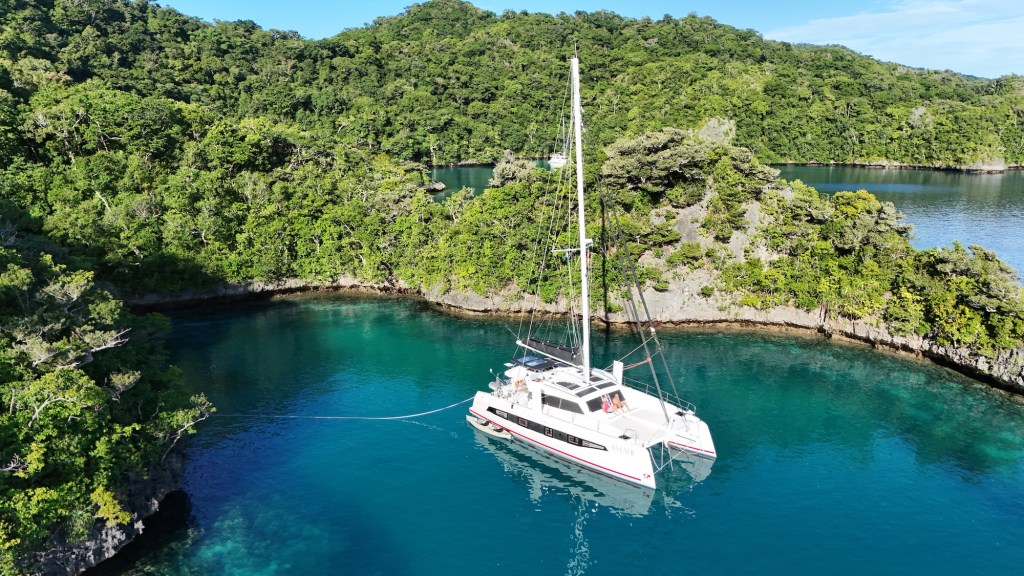
Vanua Balavu seen from above is a maze of tiny, uninhabited, lush islands behind a reef, and each visiting boat can easily find a nook to anchor in. There is only one beach at low tide, so sundowners were announced on Noforeignland app and we tied all our dinghies together in a little bay and someone even played the saxophone.
Eager to experience the southern Lau, we took the next opportunity of favourable weather a couple of weeks later and set course towards Fulanga. It is an overnight passage (150 nm) and again you need to time it right. We waited for a low with favourable wind direction but that meant rain and squally conditions. Only the very decided take the leap down to the southern Lau. We were a group of five catamarans who had met on the South Pacific rally the previous year in Vanuatu and had planned to make it to Fulanga and nothing was going to stop us. The weather was not pleasant; the wind did not turn into the NE corner as predicted so we motor sailed into wind and waves most of the way. Luckily those moments are quickly forgotten once you arrive.
Our little flotilla reached the pass at Fulanga in the early morning at slack tide and the captain of the smallest catamaran, a retired Black Hawk instructor lined us up and calmly pronounced over the radio “Fulanga, Fulanga, we’re coming in” to highlight the special moment. The strong current whirlpooled around us and spat us out on the inside of a swimming pool coloured lagoon. The aquamarine blue was so transparent it looked 50 cm deep and not the 5 m, the depth sounder indicated. Coral limestone pinnacles with green bushes formed mushroom shaped landmarks everywhere in the large lagoon. At the far end, rimmed with white sandy beaches, a dozen catamarans and one monohull were anchored in the light breeze. What we didn’t know then was that they would soon become our sundowner friends, wing foil instructors, pipi clams co-collectors and in that same anchorage, we would have a tsunami warning (nothing happened), a Star link black out (lasted 3 hours) and many windy days (kept the mosquitoes away and the wing foilers happy).
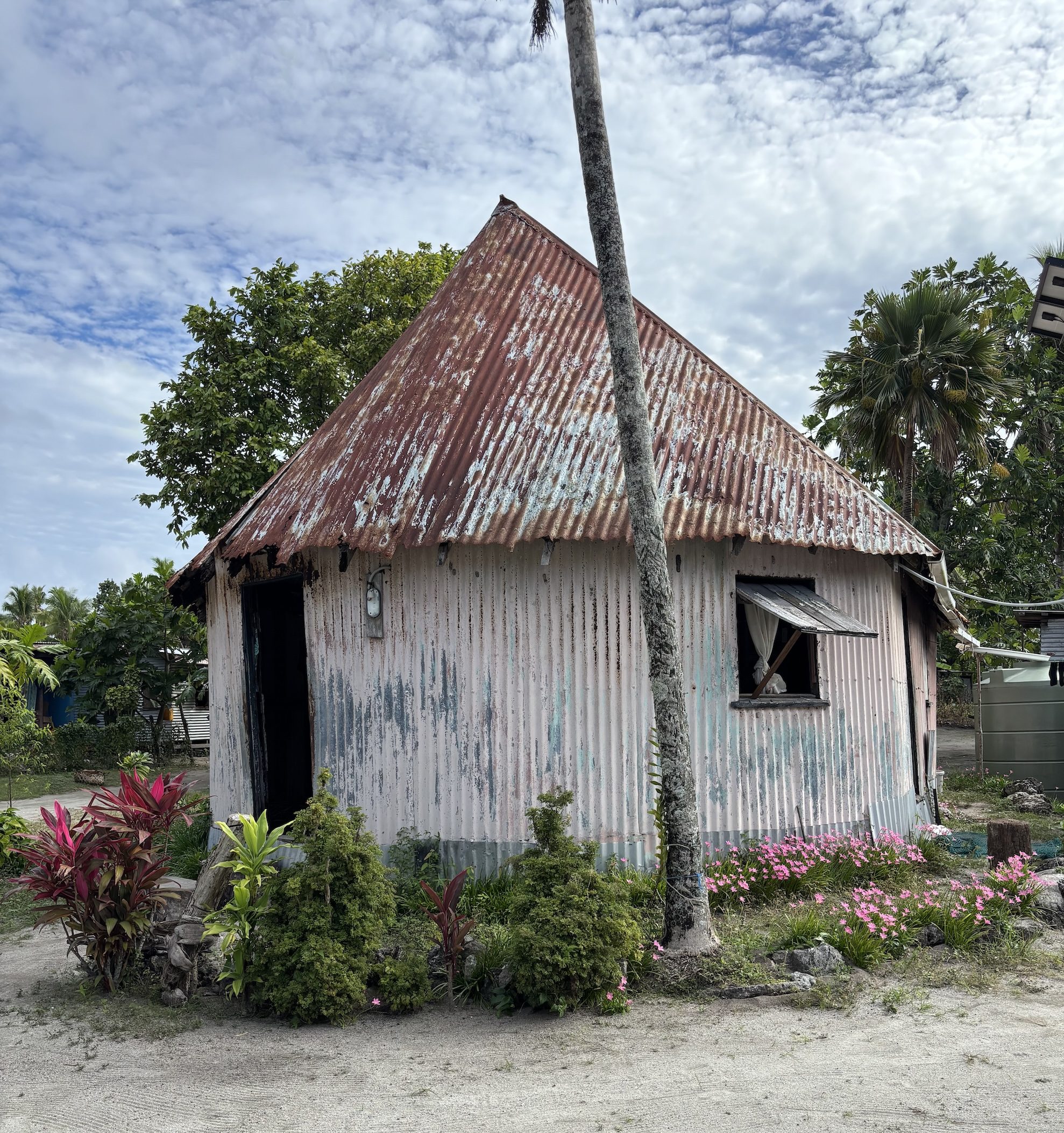
The sevusevu ceremony here was similar to the one we experienced in Vanua Balavu. The chief received our kava gifts and welcomed us to his village in Fijian. We wrote our names in the guestbook and were encouraged to come to church in the village on Sundays. Zeta, the son of the village spokesperson, showed us around and introduced us to the woodwork shops and eventually dropped us off at our dedicated host families. Every boat gets a host family who will take care of them and answer questions about village life and traditions. Often you are invited to share Sunday lunch with your host in their bure. Some crews took their family out for a day on their boat or went fishing for lobsters in the lagoon.
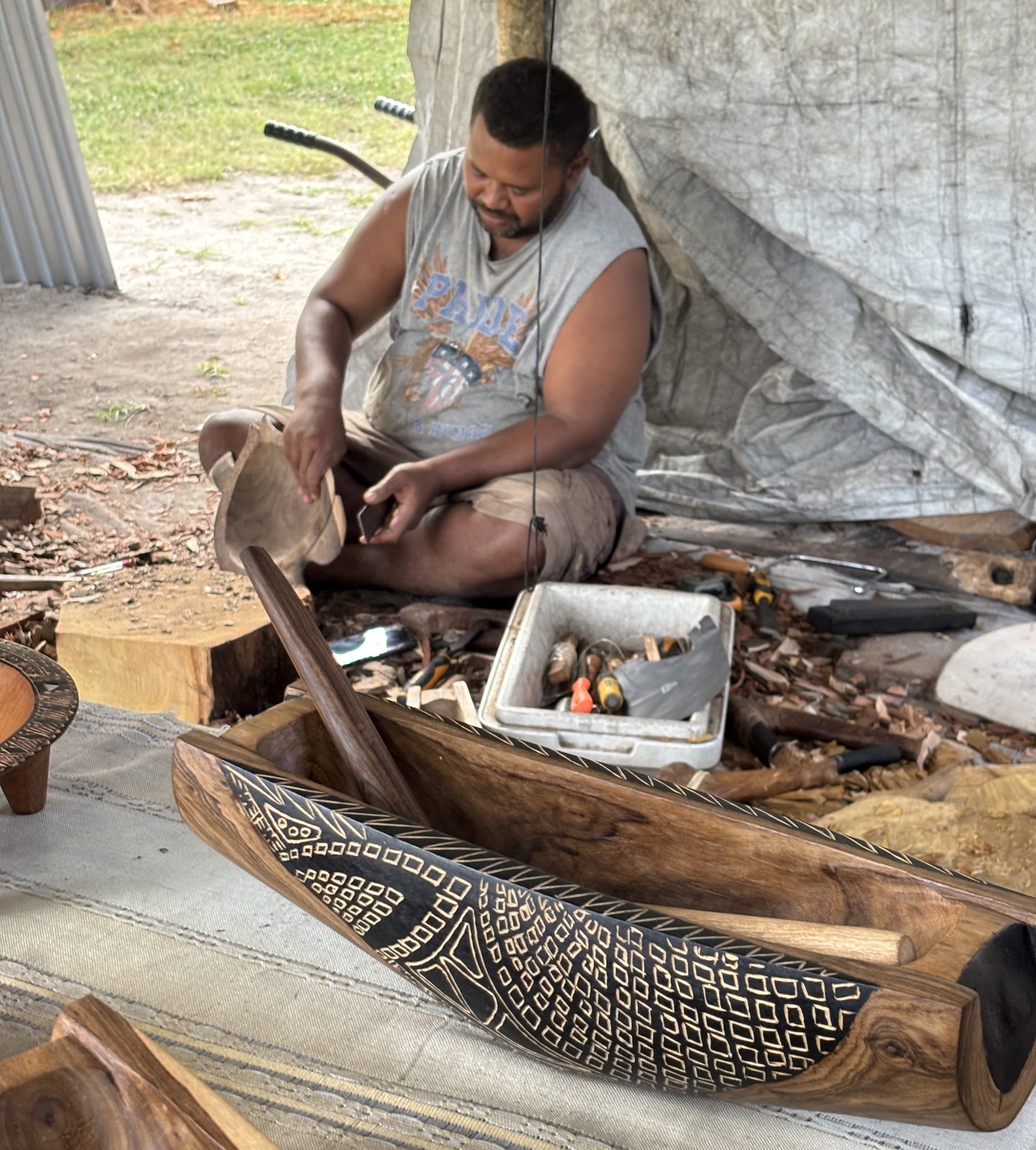
Zeta was our host. He was a skilled woodworker. We sat with him in his workshop, a woven mat under a leaf roof. He spoke good English, despite Lauen (a unique mix of standard Fijian and Tongan) being his first language, so many questions were asked and we listened and learned about the Lau culture.
The reminiscent of Tongan influence is still apparent in the Lau where the Melanesian heritage is mixed with Polynesian traits. The Lauen here look very much like the Tongans who live more than 400 miles away. Before the European missionaries arrived and stunted the Tongan ocean-borne imperialism, the Lau was practically a Tongan colony; traders, carpenters, adventurers and warriors stayed for months and years before returning to Tonga and even though not all encounters were friendly, an important interchange of workmanship developed during those times. “They came here to steal our women,” Zeta said with a laugh, “and we learned boatbuilding in return.”
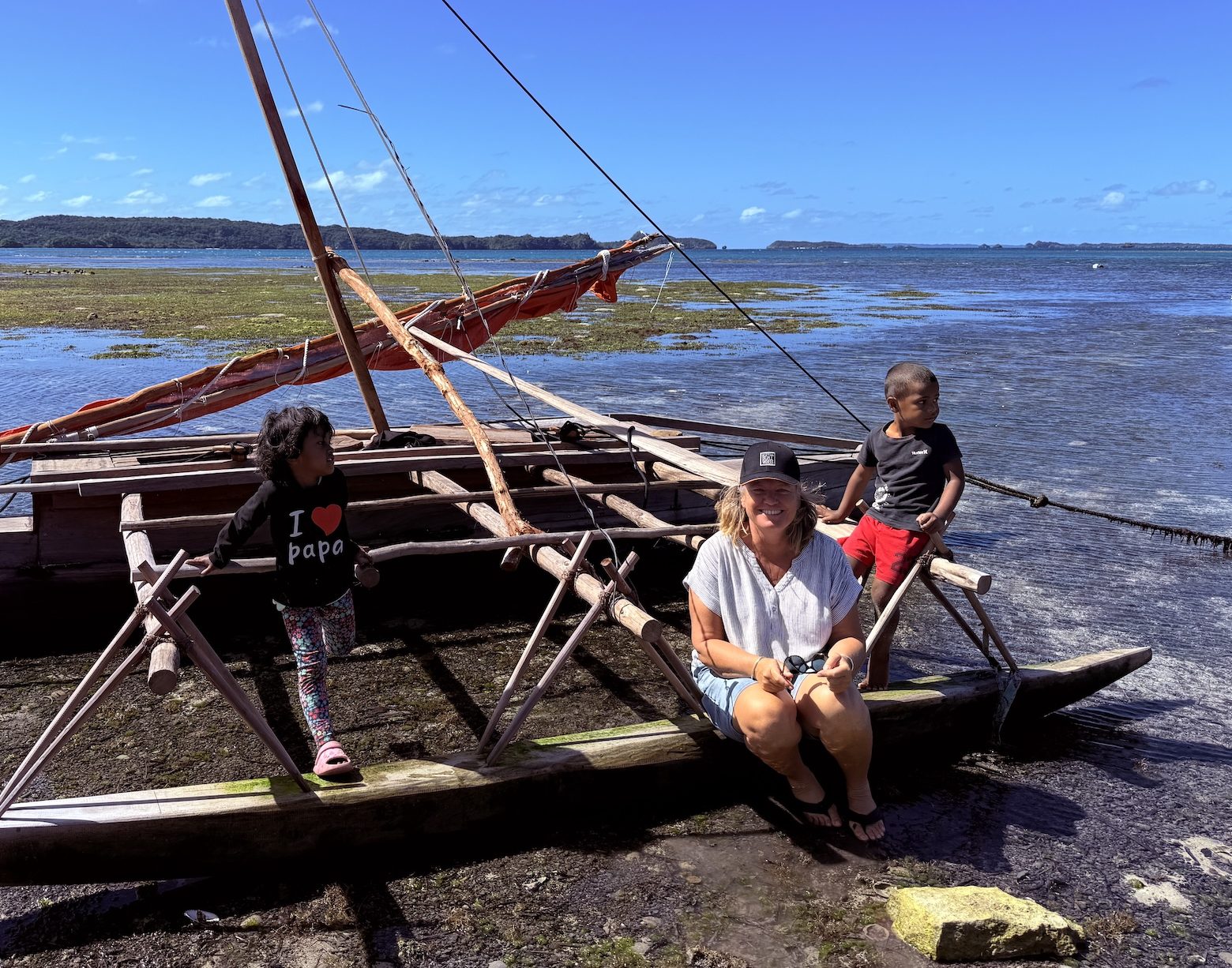
It started with the drua, a fast-sailing canoe with two hulls, one smaller than the other and the small hull always sailed to windward. A blue-water, long range sailing boat, plank-built inVesi Loa timber, a worm resistant hardwood only available in the limestone belt of Southern Lau. It is still considered superior to all other boat building timbers in the South Pacific. The experienced Tongan seafarers and warriors quickly found out that these highly valued boats taken as war tokens, were more agile than their own Polynesian catamarans and replaced them in one generation. The Lauen built drua also called the Waqa tabu, sacred canoe, was the most valuable and expensive asset a chief could possess. They were often more than 100ft long and could carry over 200 people and still sail up to 15 knots. Construction could take 7 years and would involve the whole village. The powerful chiefs of the Bau island or the King of Tonga would set off to war with 40-50 fast sailing druas at a time.
“Our ancestors were skilled navigators.” Zeta explained. They navigated with the sun and the stars. As opposed to the planets, the stars hold a fixed celestial position throughout the year, they only change their rising time with the seasons. So the Polynesians navigators would set out memorizing the sequence of stars, they should steer towards depending on the island they wanted to reach. Swell pattern and cloud formation around islands, change in currents and sea temperature and birds fly paths would also give them indication of where land would be. Some would sail with frigatebirds on board and if they didn’t come back to the drua, they would most probably have found land because their feathers get soaked if they landed on water.
When we later arrived at Kadavu, a larger island 120 nm west of the Lau group, we experienced the impressive navigation skills of the Fijians. We left our boat anchored in a bay and went with the local chief in the village panga to the township to provision. It was a 14 nm ride at full speed between reefs and outcrops with waves and strong currents. He knew exactly where to go close to shore and where to do a zig zag course between the reefs.
Whilst Zeta was talking, he was shaving pieces of timber with a chisel. He was making a drum for another sailor, selling it would enable him to pay for school for his kids boarding with an aunty in Suva. It was beautifully crafted out of ironbark and with an impressive sound to it so we ordered one as well. I had noticed that many of the items that were on display in the other workshops, were actual weapons of war: a totokia, a battle hammer club, a kinikini, a broad bladed paddle designed to spilt flesh, crush skulls and break bones. I asked Zeta about it and he said “come here tomorrow at high tide and I’ll show you something.”
The next morning we came back and Zeta jumped in our dinghy and directed us to a path behind the mangroves. The path was steep and almost impassable. “We used to live up here in fortifications before the English told us to make new villages near the water,” he said.
“Why did people want to live up here?”
“In the olden days, we were always at war, so the chief wanted to be able to see when the enemy approached.”
We had reached the top of the hill, and he pointed towards the anchorage where all the yachts swayed on their anchor and in the horizon towards the east, Ongea the other island in the Southern Lau. “That’s where they came from.”
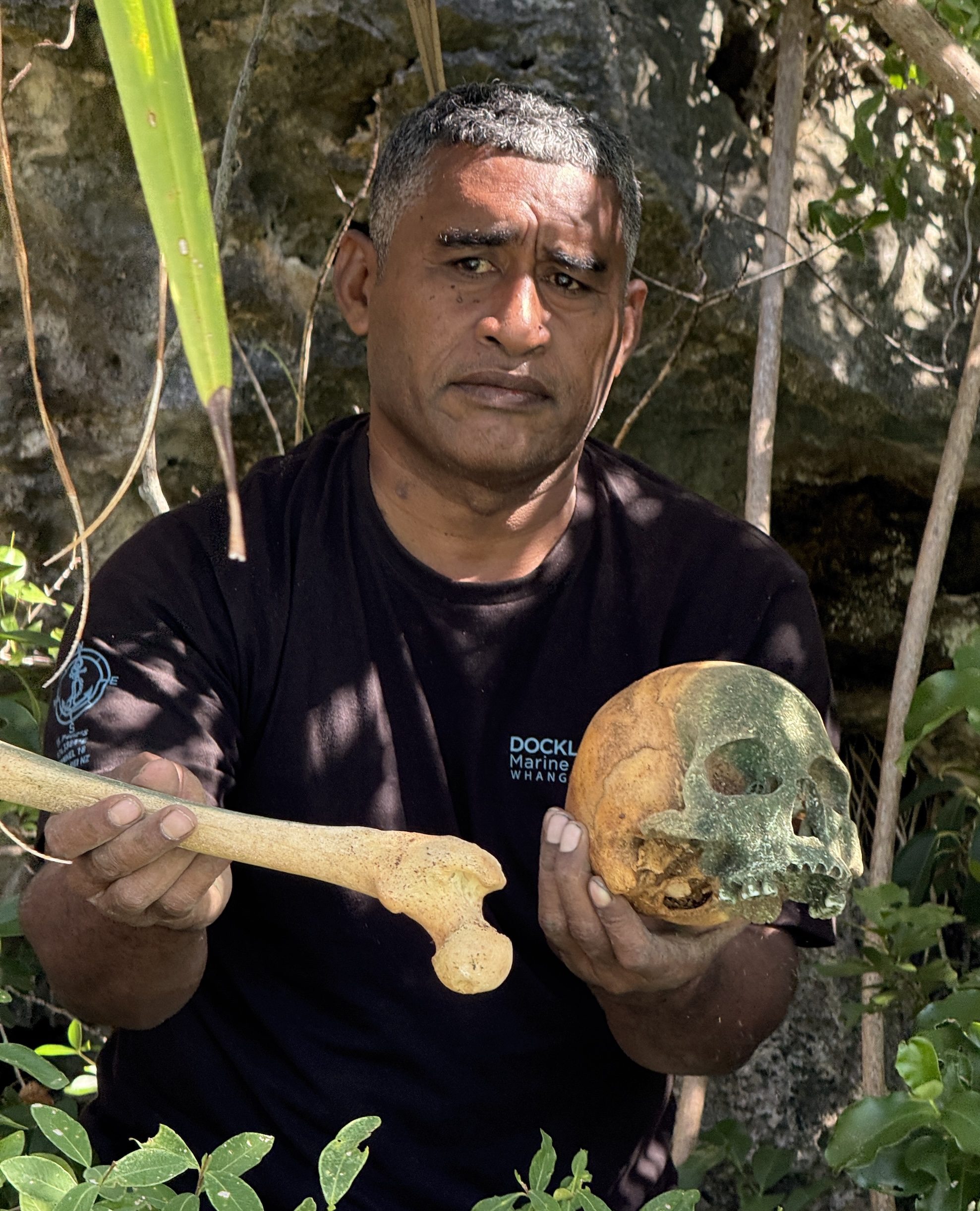
We had entered the cave a little further down the path by now. Suddenly I saw Zeta holding a skull and a long femur in his hands.
“Who are they?”
“These are the remains of those warriors from Tonga,” he said. ”Ancient burial caves like this one are everywhere here in the Lau.”
We didn’t ask any further questions. Coming up close with Fijian history was interesting and fascinating but in the end, it was the friendly and welcoming attitude from everyone we met at Fulanga and in the Lau, that made the biggest impression. We could have stayed until the gas ran out, but more adventures were waiting ahead. Isn’t it funny, I only know the word for hello in Fijian, not for goodbye, so Bula Fulanga, until next time.
Published in Yachting World 2026
Reference:
Waqa Tabu-sacred ships: The Fijian Drua by Pete Nuttall, Colin Philip, Paul D’Arcy, 2014
Haddon, A.C.; Hornell, J. Canoes of Oceania Volume I: The Canoes of Polynesia, Fiji, and Micronesia. Honolulu, Hawaii: Bishop Museum Press,1936
Routledge, D. Matanitu. The struggle for power in early Fiji. Suva, Fiji: University of the South Pacific, 1985
Tonga
Once in a lifetime
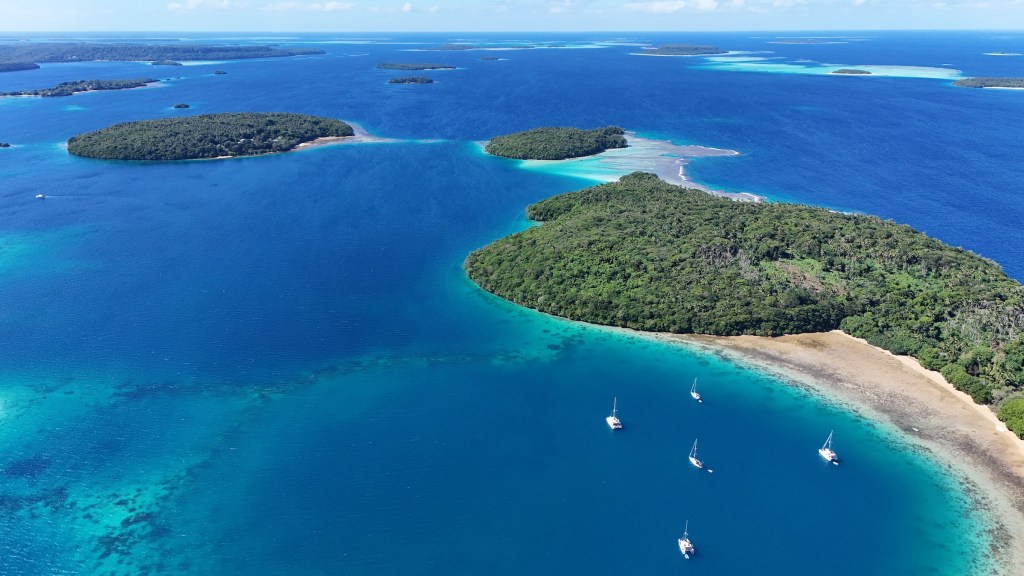
Sailing east from Australia is no easy feat. Last year we did extended cruising in Vanuatu and only a few weeks after tying up to our mooring in Sydney, another adventure started forming in the back of my mind and it didn’t take much to convince the skipper. If we sailed to New Zealand, we could possibly make it all the way to the Kingdom of Tonga, the land of underwater volcanos, ancient navigation traditions and swimming with humpback whales.
We got a perfect weather window at the end of March taking us over the Tasman Sea to the North Island of New Zealand. The only mishap on the seven-day passage was a young albatross tangled in our fishing line which we freed unharmed, and any hint of the mariner’s curse flew off with it.
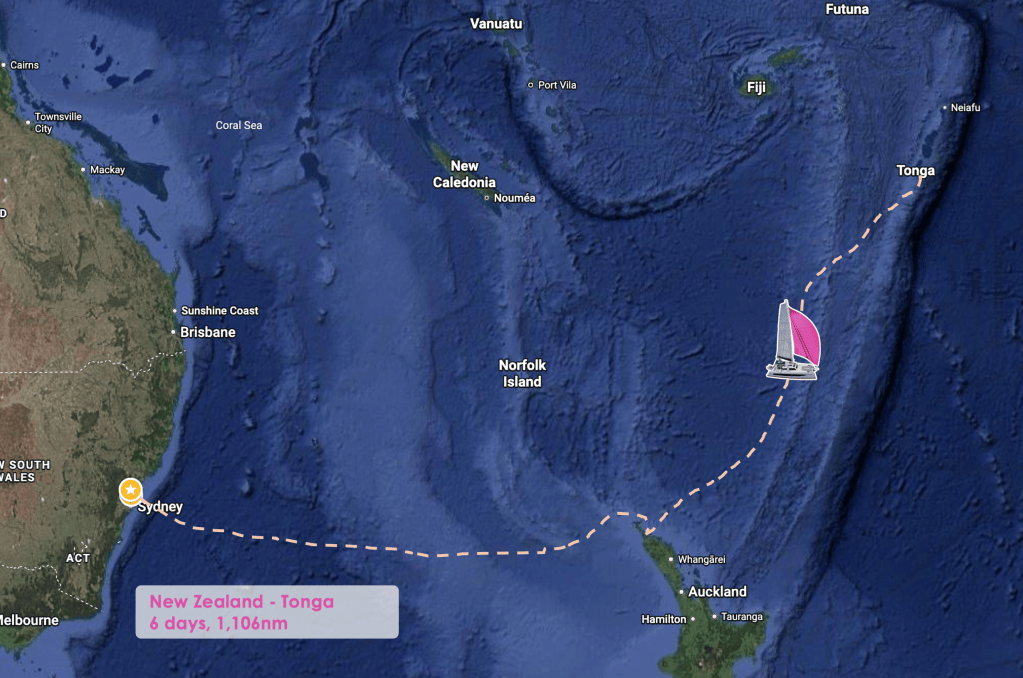
A large group of boats from the South Pacific Rally set out from New Zealand in the beginning of May, the majority aiming for Fiji, and only a few with Tonga as their end destination. The passage from New Zealand to Tonga was rough, with wind and waves on a tight angle. With only two people on board, a stopover at Minerva Reef two-thirds of the way there was greatly appreciated to reset moral and wash Travelcalm out of the system.
(Photo: South Minerva on chartplotter)
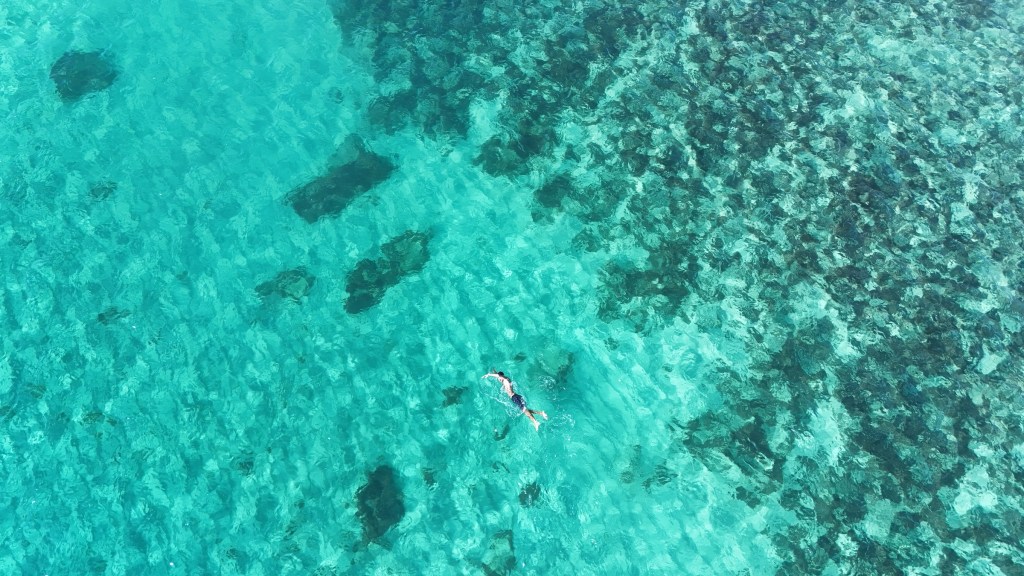
Minerva reef consists of North and South Minerva separated by about 20 n. They are two volcano crater rims rising from the ocean floor 4000m below to just a meter over the water’s surface at high tide, just enough to give shelter from the ocean swell. They are sometimes patrolled by the Tongan navy, but you are allowed to seek shelter from bad weather, look for lobsters on the reef or have a swim in lagoon as you wait for the next weather window.
(Photo: Minerva drone shot)
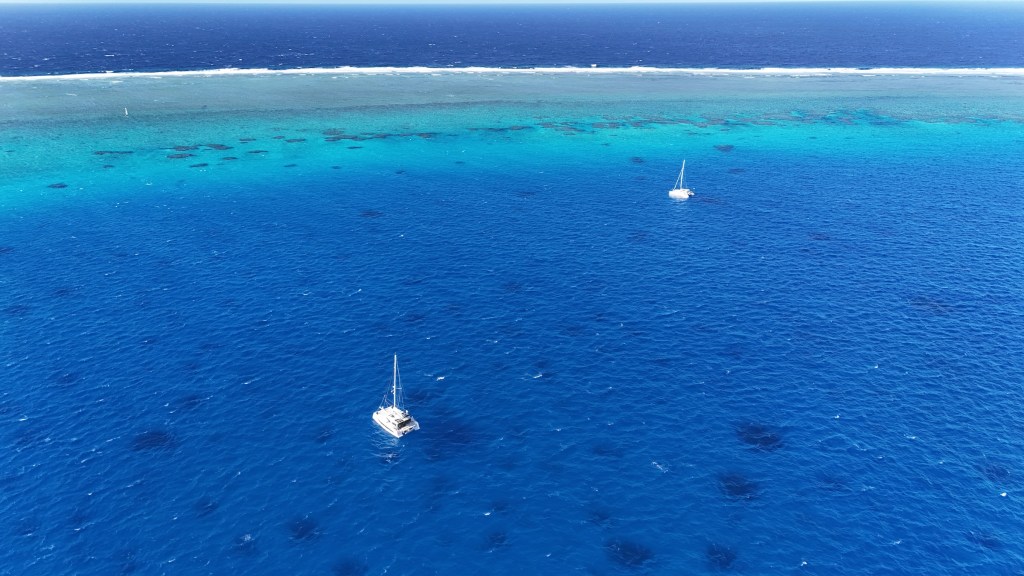
After a 24-hour reset, a snorkel and a feast of fresh caught yellow fin tuna, we continued the last 350 nm towards the southern part of the archipelagos of Tonga. The island group consists of 171 islands, only 36 of them inhabited, and spread out over 700 square kilometres. In ancient times, the Tongan rulers established a widespread maritime empire with cultural influence reaching all the way to Samoa, Kiribati, Vanuatu and New Caledonia. They established sophisticated seafaring skills, using the current, sea temperature and the stars, to sail their kalia (the Tongan version of a drua, a double-hulled canoe) between the islands of the Kingdom. Today the only reminiscence of that magnificent past is a couple of ferries connecting the main islands. We didn’t see any canoes and only a few longboats.
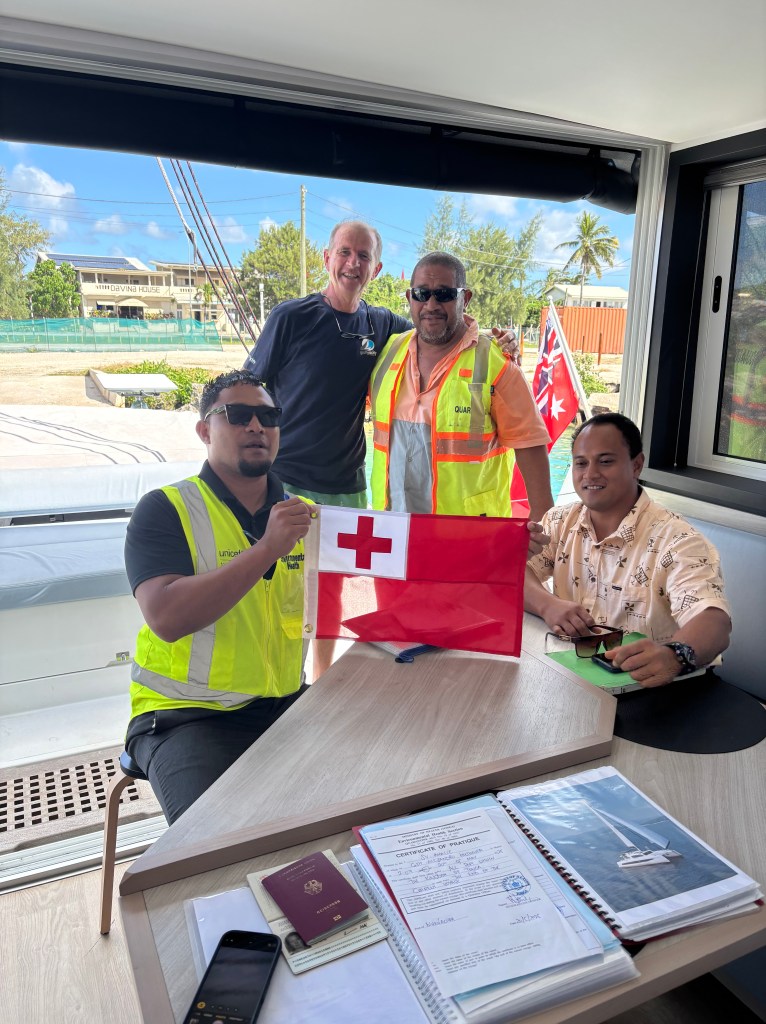
Exhausted and with an incredible feeling of accomplishment, we sailed into Nuku’alofa, the capital of the Kingdom of Tonga. The beacon on the foreshore is an immense white colonial building with a red roof: the Royal Palace. All visitors are requested to tie up to an unprotected cement wall in the fishing harbour and wait for the authorities. We expected a bustling crowd of people trying to offer us services to earn an extra cent or look at the newcomers. We had practised a few phrases aware that English is not widely spoken. Malo – thank you. Malo e leilei? – how are you? But there was nobody around to ask.
(Photo: Tongan Authorities)
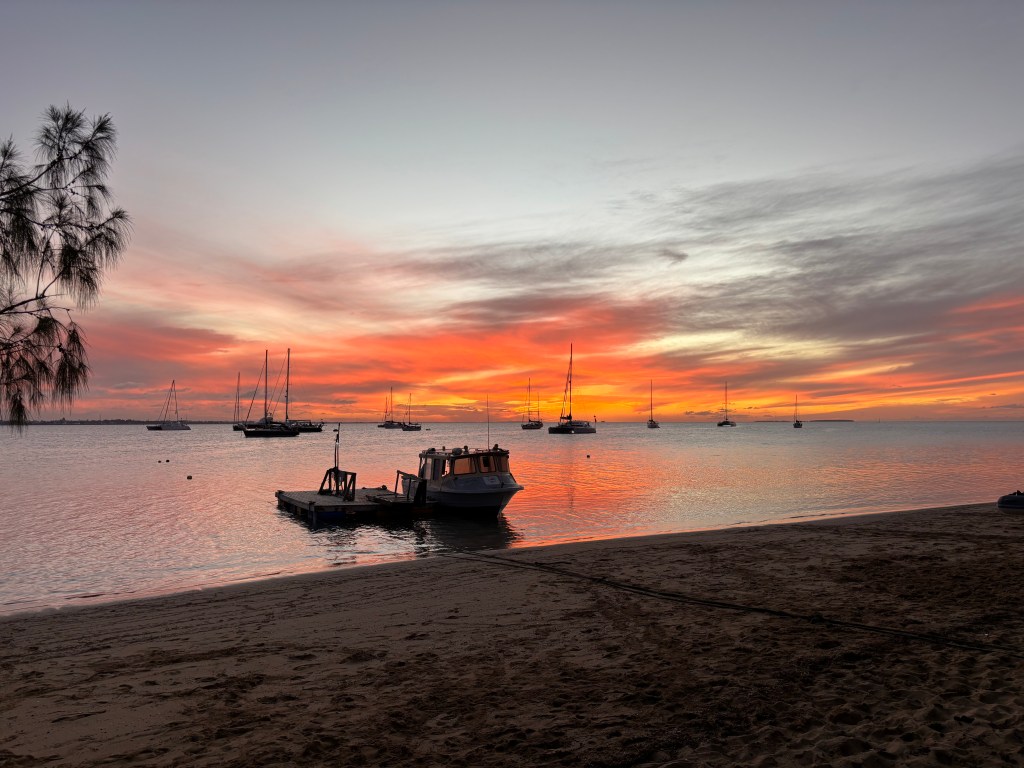
After being checked in, all the newly arrived yachts anchored in front of Nuku’alofa in the lee of a small island. Here at the precarious beach restaurant called Big Mamas, we celebrated our achievements with volleyball and cold beers around a big bonfire and started meeting the people we would be cruising with in Tonga.
(Photo: Big Mamas anchorage)
Excited to explore the foreign culture and its traditions, we went into town and walked along the low-lying shoreline towards the Royal Palace at the centre of town, to find the market. A long line of cars accompanied us. It seems Nuku’alofa is the place used cars of all sorts come to die. Everyone seemed to have one, driving it up and down the main road with their family inside, one eye on the road, the other on their phone. We learned that a significant portion of Tonga’s GDP comes from overseas remittances family and relatives working in Australia and New Zealand sending back money to buy a car. That also means not much is grown or produced in Tonga. We could buy eggs, cabbage and carrots all imported from New Zealand and the few supermarkets we found were stocked mostly with biscuits in colourful wrapping, cake mixes, soft drinks and bags of frozen chicken wings imported from the US.
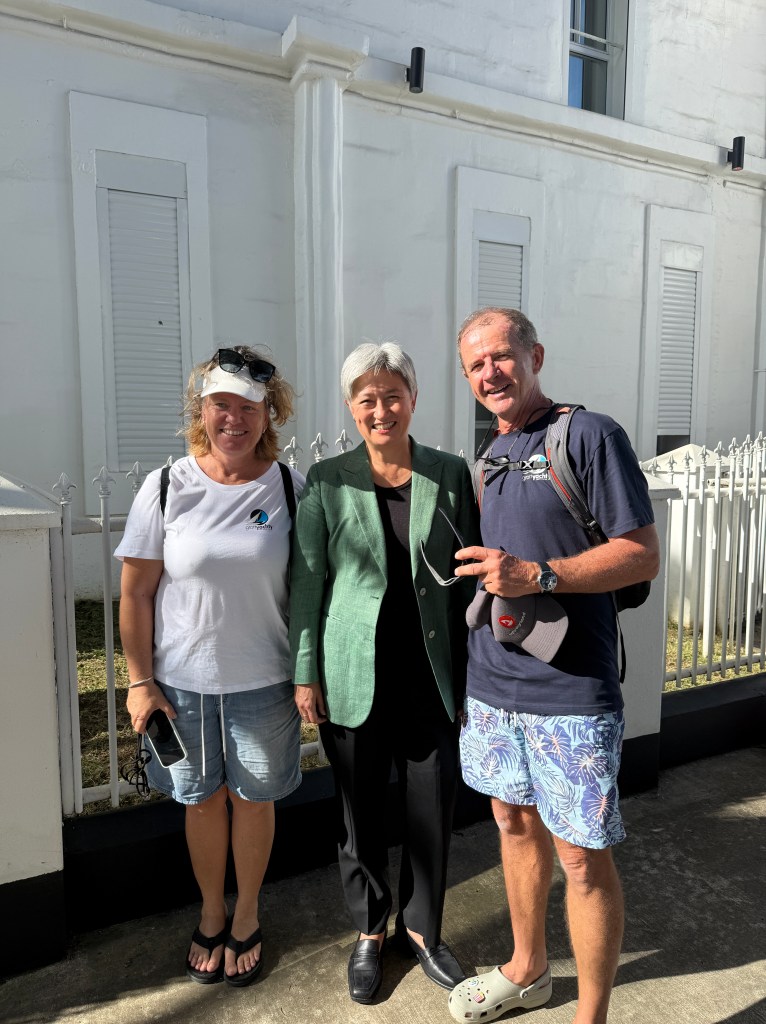
Tonga has been ruled by kings and princesses up until 2010 where a constitutional monarchy was stablished. There is still a proud heritage of a ruling noble class connected to the king Tupou VI himself with a lot of influence. Penny Wong was visiting, and a large delegation of elegantly dressed Tongans were out and about. We noticed men dressed as women, the so-called Fakaleiti, meaning “like a lady”: a respected, historical tradition playing an important role in the arts as entertainers and often assisting the royal family.
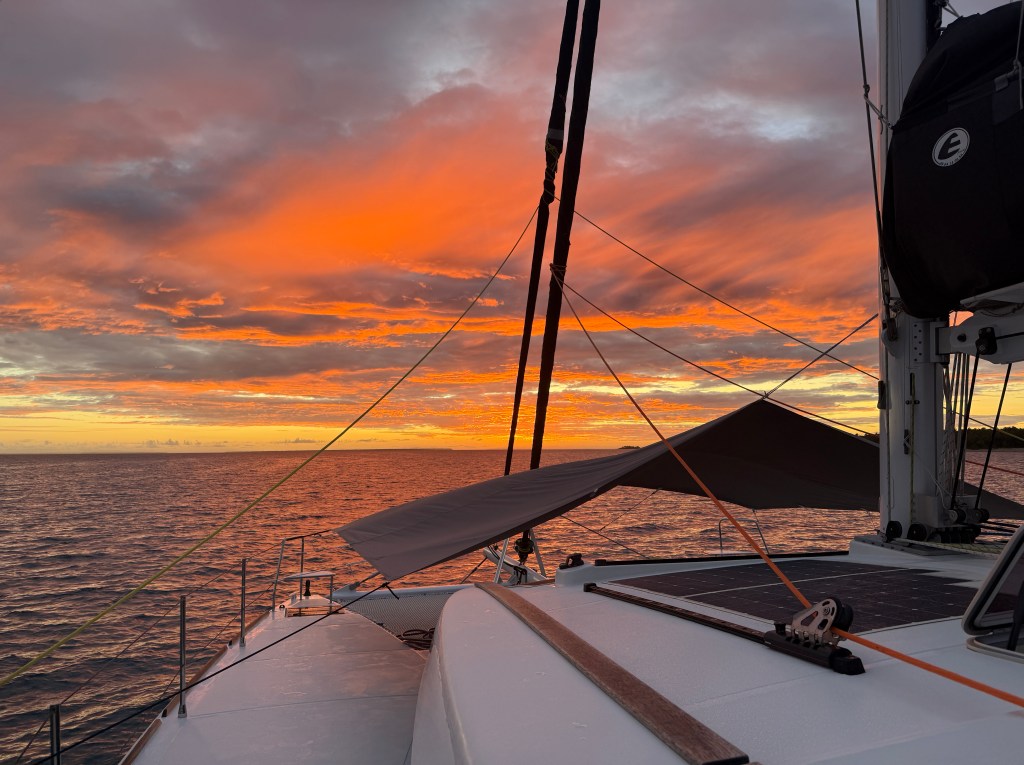
A week later, after a trough passed through with rain and thunder, we left Big Mamas and continued up to the next island group 60 nm north. The colour of the water was crystal clear around the reefs and the charts appeared sufficiently accurate, but we aimed to only transit in daylight hours between 10 and 3 pm when the sun shines directly into the water.
Out here among hundreds of reefs and the famous Hunga Tonga volcano, which a recent eruption in 2022 left a devastating tsunami, the remoteness of these beautiful islands suddenly hit me. We were literally sailing on the edge of twelve underwater volcanos. What could possibly go wrong?
The next group of islands sailing north are the Ha’api, a line of low-lying islands behind a long reef system well protected from the trade winds and the swell from the east, but if the wind turns west, you need to seek shelter further north in the Vava’u group.
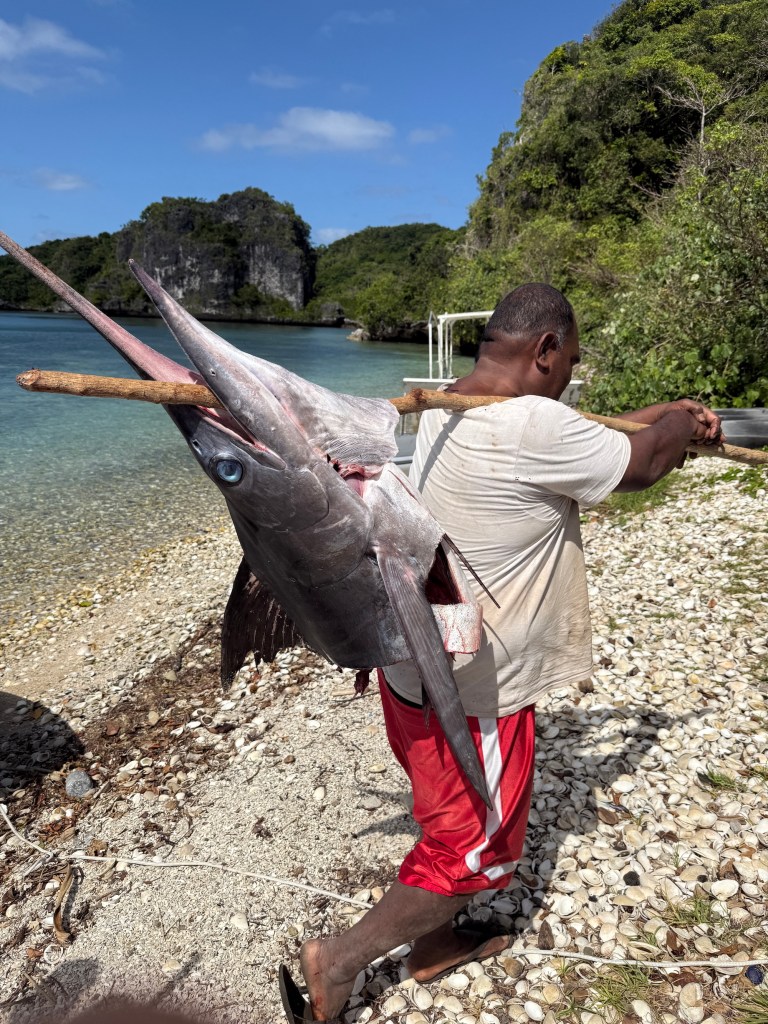
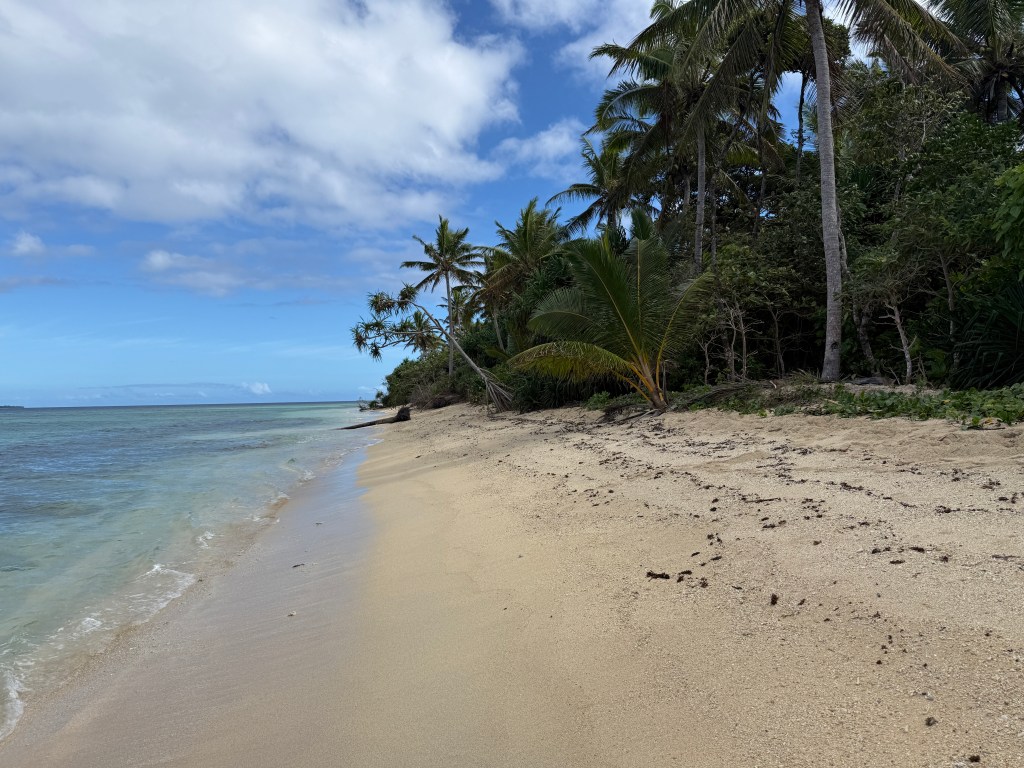
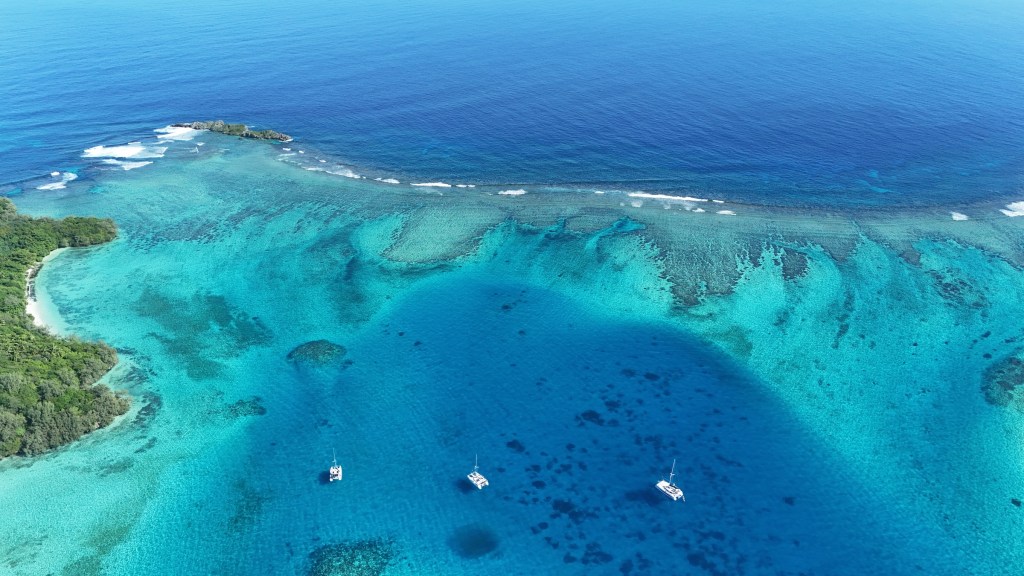
This is where the humpback whales come all the way from Antarctica to have their calves, and the tourists are allowed to swim with them provided there is an authorised guide around. The water is incredibly blue and transparent and the beaches are completely untouched and beautiful, with only a few plastic bottles washed ashore here and there.
(Photo: beautiful beach)
My first reaction to all that remoteness and beauty was to go into self-preservation mode which took a few weeks to wear off. I became scared of swimming and refused to dinghy into caves. My preferred place was the boat but slowly I got better at being an adventurer. I never 100% enjoyed the cave swimming however.
Vava’u is a lush, tall volcanic island with perhaps the safest natural harbour in the South Pacific. Lots of ARC boats come through here every season. Most only stay a couple of days, just enough to buy some provisions, have a pizza and a beer in one of the three restaurants on the waterfront and they are off again. The Tongan crowd hang out around Vava’u, close to the protected harbour and with the possibility to meet a variety of intrepid sailors from all over the world.
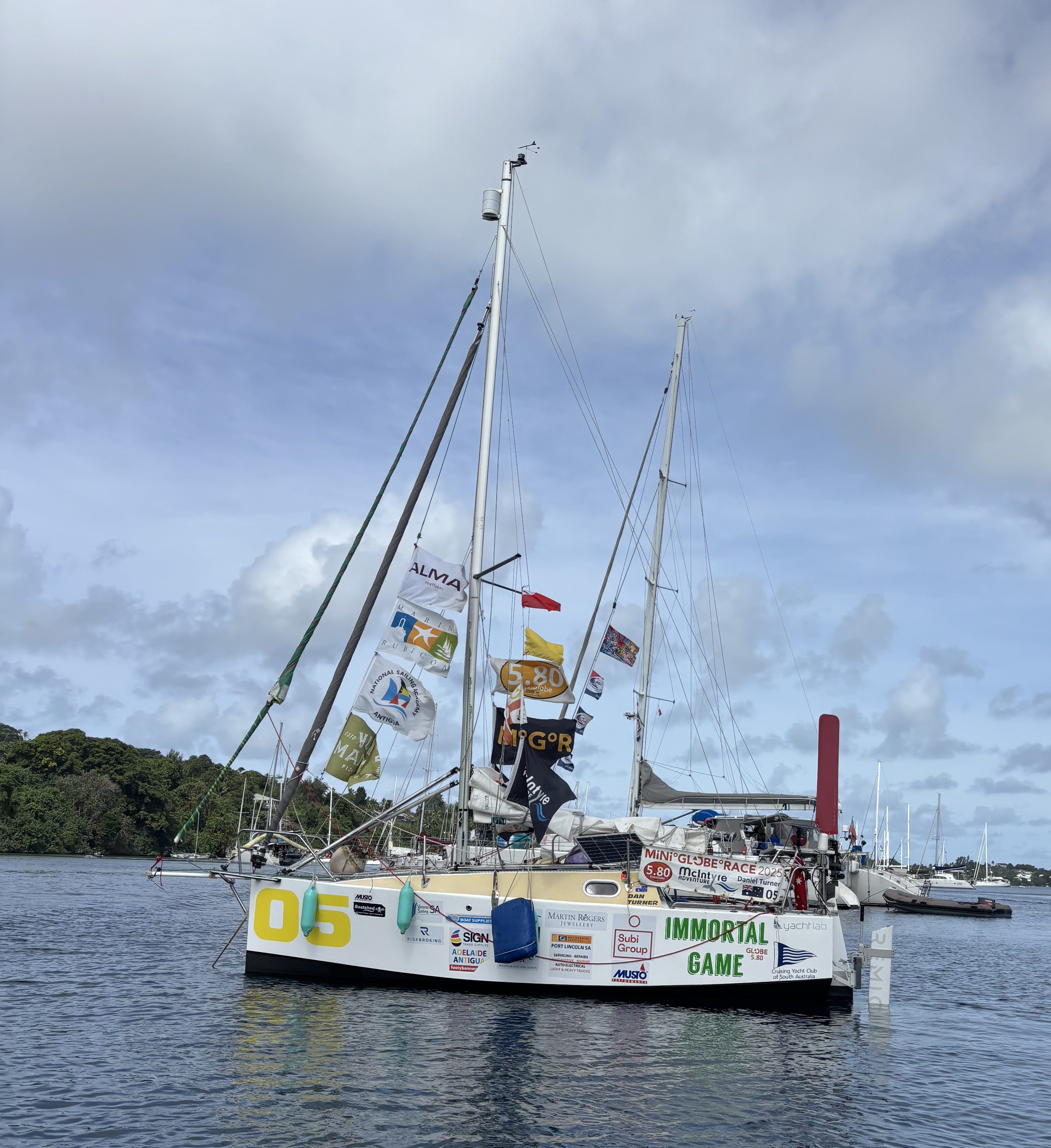
The floating bar was where the Mini Globe Race fleet tied up and had beer with everyone. They were a remarkable group of solo sailors, competing under difficult conditions in their tiny, 5.8 m home-built boats, only allowed a limited amount of water and solar power and sometimes forced to turn off their navigation light to save electricity for the auto pilot.
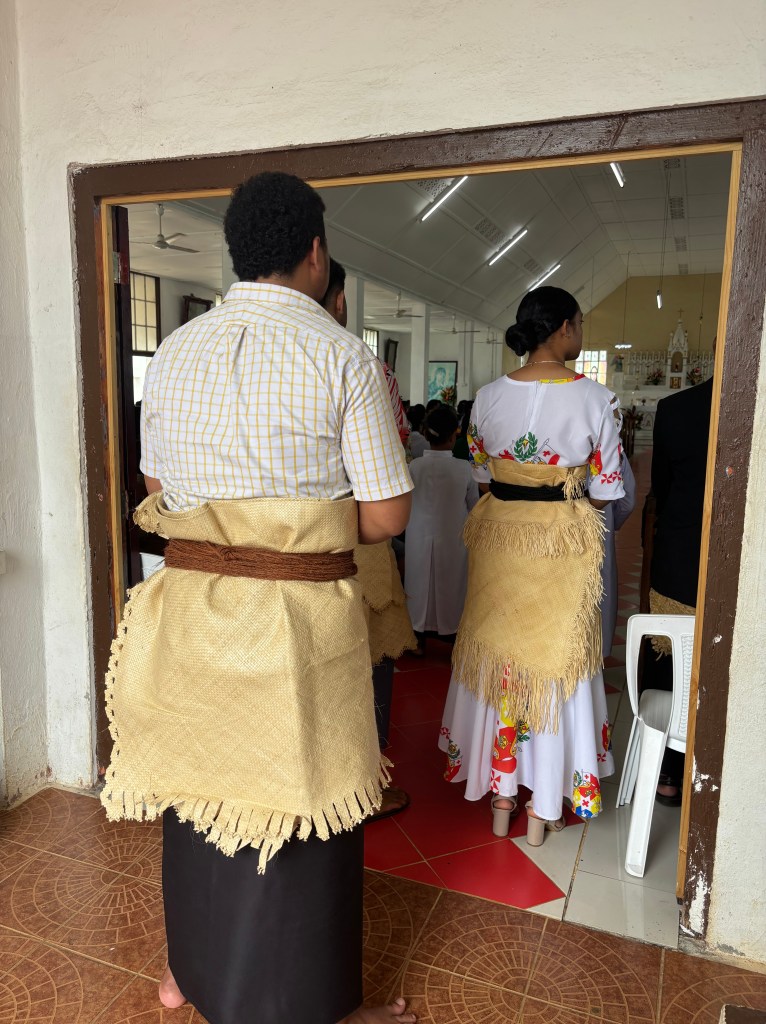
Neiafu is livelier than Nuku’alofa. Less cars but more barking dogs and grunting pigs and a constant crowing of roosters. At five in the morning the church bells start to chime announcing the first mass. Church is an important part of everyday life everywhere in Tonga and Sunday is strictly a rest day. We enjoyed going to church, listening to the choir singing loud and proud and everyone dressed in their finest waist mats, ta’ovala and jewellery..
We found our way in Tonga, learned a lot about the culture, the history and the amazing geography and had we stayed longer, we would have swam with the humpback whales as we were too early in the season. As with all travelling your expectations are often different from the reality.
Tonga is hard to get to from Australia. Lying right on the 180th meridian of longitude, more than 2000 nm away, almost as far away as you can get without sailing directly into the wind, so I’m pretty certain this will be a once in a lifetime experience but what an experience it was!
Published in Afloat 2025
Vanuatu
Melanesian Friendliness & Remote Anchorages
I’m looking up at an almost naked young man 60 feet up in the air. He’s balancing on a platform built of sticks and branches raised on a mountain top in the Vanuatuan jungle. All you can see from here is fluorescent green treetops covered in cascades of lush vines and deep down, far away in another world, the dark blue ocean.
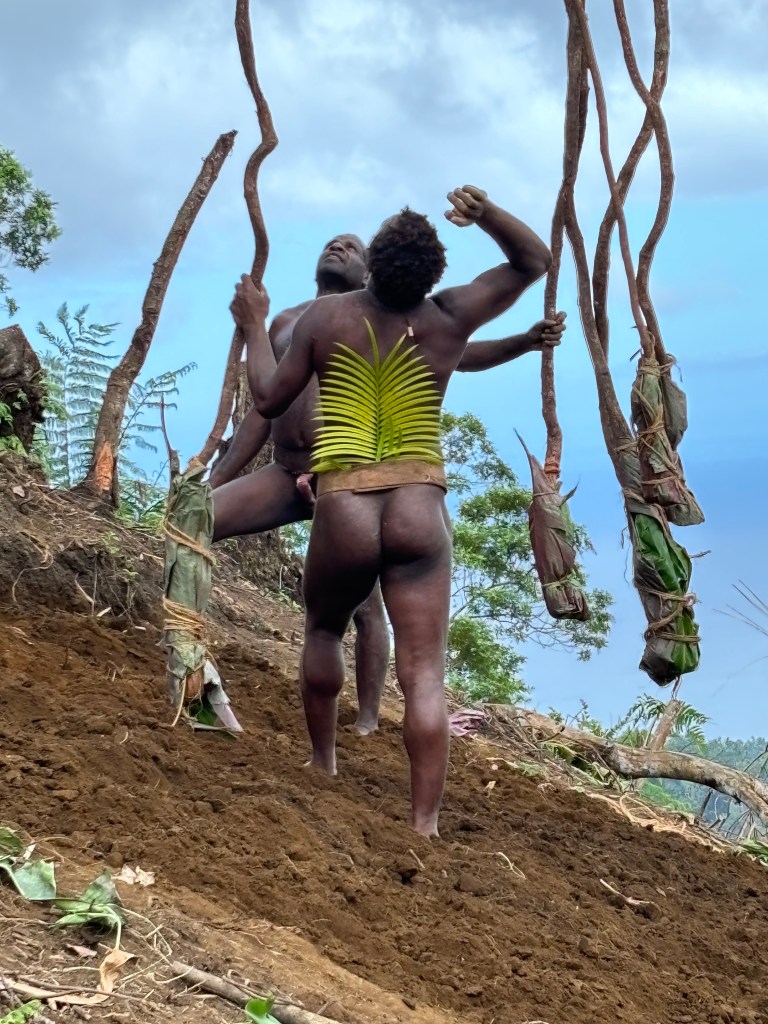
Men and women in their traditional dress; penis sheaths and grass skirts, chant and dance next to the tower. My eyes go back to the young man up on the platform. He’s chanting now, spreading his arms out, his ankles tied to two vines cut to the exact length so when he jumps his shoulder will just touch the rich, dark volcanic soil below. We are about to witness the land diving ritual, nagol which is performed each year between April and June to ensure a bountiful yam harvest. The singing gets louder, my eyes transfixed on his tiny body, he crosses his arms in front of his chest, arcs his spine backwards and slowly lets his body fall into the open space.
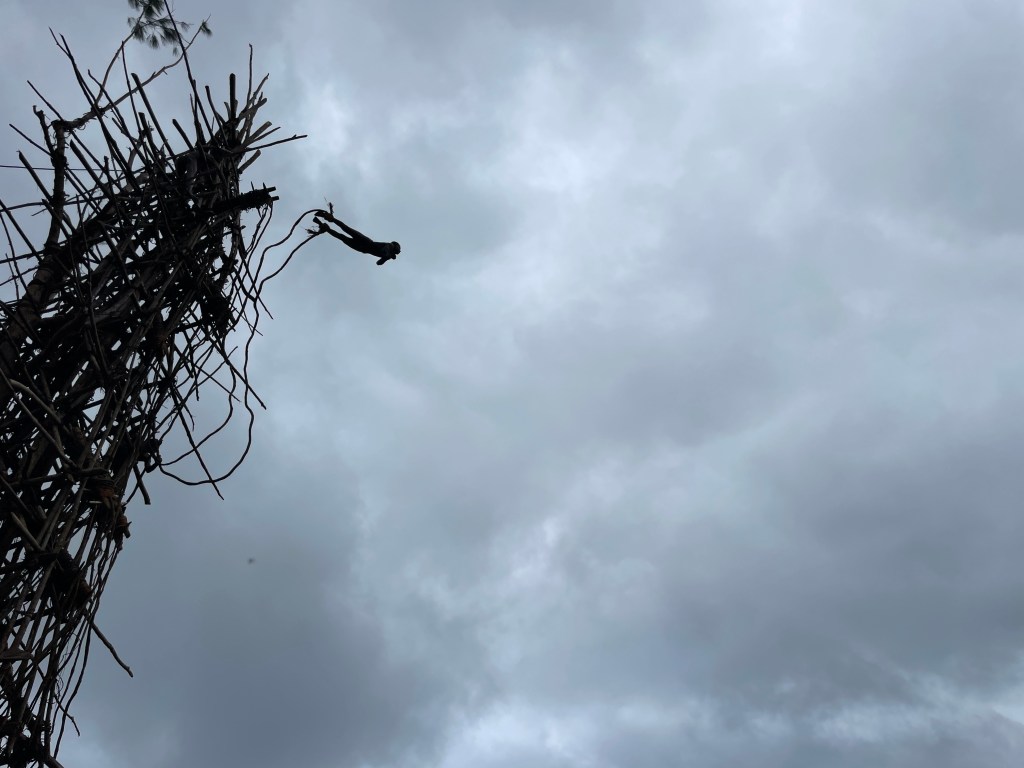
I hold my breath. He crashes down into the dirt right in front of me with a loud thump. Two men rush ahead to cut his ankles free and pull him up. Now I can see he is just a boy. He’s alive and he stumbles back to the other dancers. I remember to breathe but my heart is still racing. It’s crazy and dangerous, a ritual from another time and purely performed here on Pentecost Island and the only way to visit is sailing here on a yacht.
Sailing in the South Pacific has been my dream since I was nineteen years old and spend my time reading books written by a Danish hippie, Troels Kloevedal who sailed around the world with friends and family in the 70’s in an old gaff rigged schooner visiting remote places where the locals would come out in dugout canoes and offer him fruit in exchange for anything he could spare.
I found my captain sailing in the Med twenty-eight years ago. Delivering a boat with my sister, tucked into a small fishing port at the south end of Sardinia in a wild storm, a young Chilean sailor offered us help and later homemade pizzas and that’s when it all started. Almost three decades and four kids later we moved from Santiago to Sydney where we bought our first catamaran, a Fountaine Pajot Helia 44. We fell in love with the space and comfort but realized we wanted a boat that would sail in light winds and fly in a gale and discovered Catana’s newly launched Ocean Class 50. With daggerboards, a central steering station and the light weigh of 13.4T it ticked all the boxes for our dream boat. We received the boat in France where we sailed for a couple of weeks until it was shipped inside a containership to Australia to be exhibited at the Sydney Boat Show. Our first adventure out of Sydney Heads, for a day sail with Catana’s sales manager Ben Monier, showed us what the boat was capable of. We sailed out with one reef in the main and the gennaker on a beautiful, sunny day when a huge gust suddenly accelerated the boat and took it flying to an exhilarating speed of 23.8 knots. No need to do that again!
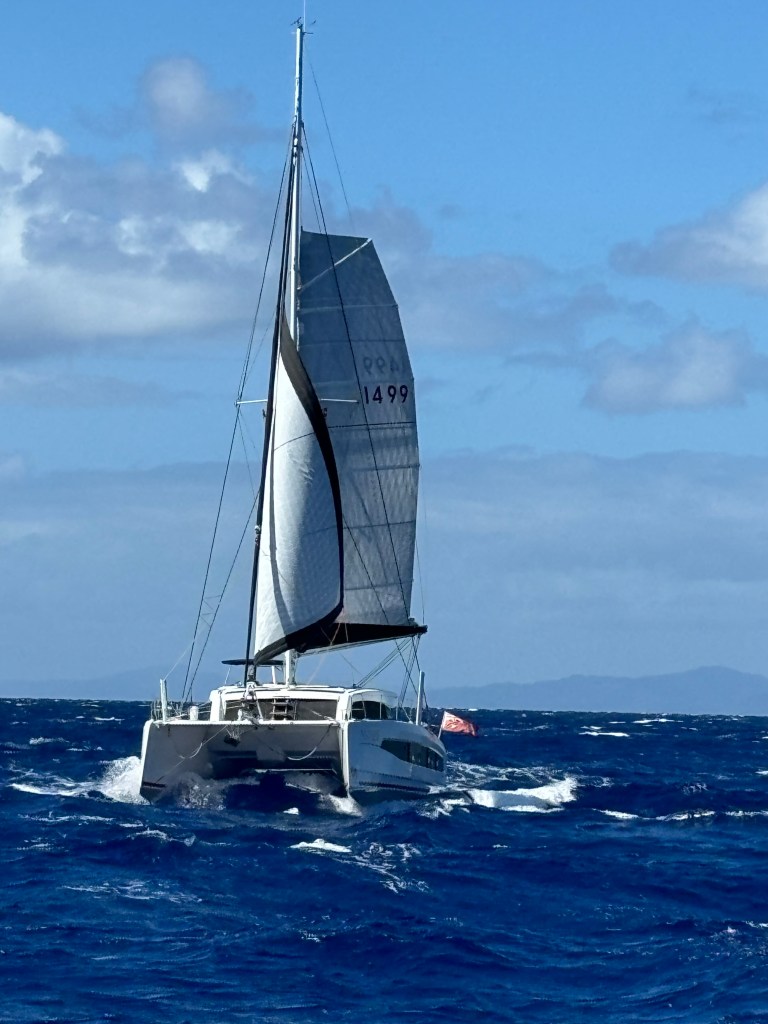
It was like we had been given a young stallion and we were not one hundred percent sure how to ride it. On our short-handed shakedown cruise up and down the East coast of Australia, we learned how to handle the boat. Reduce sail in time and always at night, dock it in tight spaces just the two of us. Picking up mooring buoys proved to be the most challenging with the bowsprit and its two stays connected in sharp angles to the hulls which makes it difficult to pick up the mooring ropes. After we bought a set of “marriage saver” headphones, the communication improved tremendously so when we tied up at our mooring in Sydneyn we felt we had tamed the beast and we both knew we were ready for the next step: take the boat into the South Pacific.
There’s two ways of getting there. Crossing the Tasman to New Zealand which is not for the faint hearted and from there venture north to Fiji and Tonga or sail East from Australia 780 nm to New Caledonia which is French territory and from there go to Vanuatu or maybe Fiji. We joined Go East Rally, owned and managed by New Zealander Viki Moore, because we had no idea where to start our preparations and found the thought of sailing in company attractive. It turned out to be a great idea mainly because of the paperwork. When you leave Australia, you need to export your boat and all the customs declarations both for leaving and entering another country can be daunting. The extensive check list for the rally got the communication and safety up to Cat 1 level which is required for boats departing from New Zealand but not for Australian boats. Attending a First Aid course for remote areas, equipping the grab bag, getting the proper charts, installing Star Link and Data Hub for tracking were all small pieces in a puzzle that finally came together and prepared us and the boat for a safe passage.
By the end of April we left Sydney and sailed 400 nm north to The Boat Works, a world class boat yard on the Coomera river at the Gold Coast, hoping to fix a problem with our Max-Prop propellers. The port side prop suddenly engages when sailing over 9-10 knots so Catana offered to install a new one. It was also the meeting place for the other rally boats.
Before leaving we provisioned sparingly for the passage aware that arriving in New Caledonia all fresh fruit and vegetables would be confiscated but knowing that we would have access to French cheese and wine, baguettes, supermarkets and fuel. (The boat has ample space for easy accessible storage, 2 x 400 l fuel tanks, 2 x 400 l water tank plus a 12 volt 90L/hour water maker)
Our New Zealand weather router (John Martin from Ocean and Offshore Cruising Strategies) gave us the go ahead and on a Sunday morning the Australian Border Force arrived with a team of twenty people to check the thirteen rally boats out from the South Port Yacht Club. The fleet motored out through the Gold Coast Seaway towards the sea mounts 100 nm offshore in light south westerly winds.
We settled into a routine with comfortable two-hour shifts, four hours off with our third crew, Alex’s sister who had joined us at South Port. It was comforting to see the other rally boats on AIS and on the Predict wind tracker as there was nobody else out there once we crossed the highway of cargo ships going up and down the Australia coast. After motor sailing for two days with relatively flat seas, except when passing the seamounts which are under water mountains that come up from 4000 m to 400 m or less and create currents and waves from all directions, the wind set in from the south and we were able to turn slightly north and set course directly towards New Caledonia.
Unfortunately our problem with the propeller had not been resolved despite the brand new one installed, so we had to keep boat speed down. Even with two reefs in the main and the headsail reefed, we were still going at 8-10 knots. The waves became short and steep and every time a wave slammed the side of the boat we feared it was the prop engaging. Generally, the boat handles the waves very well but we had a large cross swell coming up from the southern oceans and wind waves on the front corner combined with several seamounts on the way (which we quickly learned to steer around) so it felt pretty much like being in a washing machine. Meals were eaten on the floor in the saloon which seemed to be the most comfortable place and that’s a lot to say for a catamaran.
Watches were now undertaken from inside the cabin, nothing to look at outside apart from checking the sails and the horizon from time to time.
The boat handles strong winds extremely well and doesn’t need much sail to take off and plane. It feels safe to be on board; the German sheeting eliminates the danger from an unexpected gybe and the reefing system has separate luff and leech reefing lines. The best preparation we did for the ocean crossing was marking all halyards and reefing lines for each reefing point, so there was never a doubt as to where the lines should be set. This way reefing can be done quickly by one person whilst the other only needs to check that everything runs smoothly.
On day four, 300 nm west of New Caledonia, we started to get news about violent rioting in Noumea. The local authorities and the rally organisers advised us to avoid the area. The airport had closed, supermarkets and shops burned down and fuel reserved exclusively for the military. The messages were clear: go back to Australia or continue to Vanuatu which meant another three days sailing in strong winds and heavy seas. We had not really planned to go to Vanuatu, but we had no other choice than to modify our plan and get on with it. As they say in Australia: “eat some concrete and harden up!”. Winds had picked up, 6 s period waves and a strong current against us made the boat rock and slam so hard we thought it would break into pieces. We manged to pass Isle of Pines at the southern end of New Caledonia, and exhausted and tired, set course for Tanna, a volcanic island in the south of Vanuatu archipelagos.
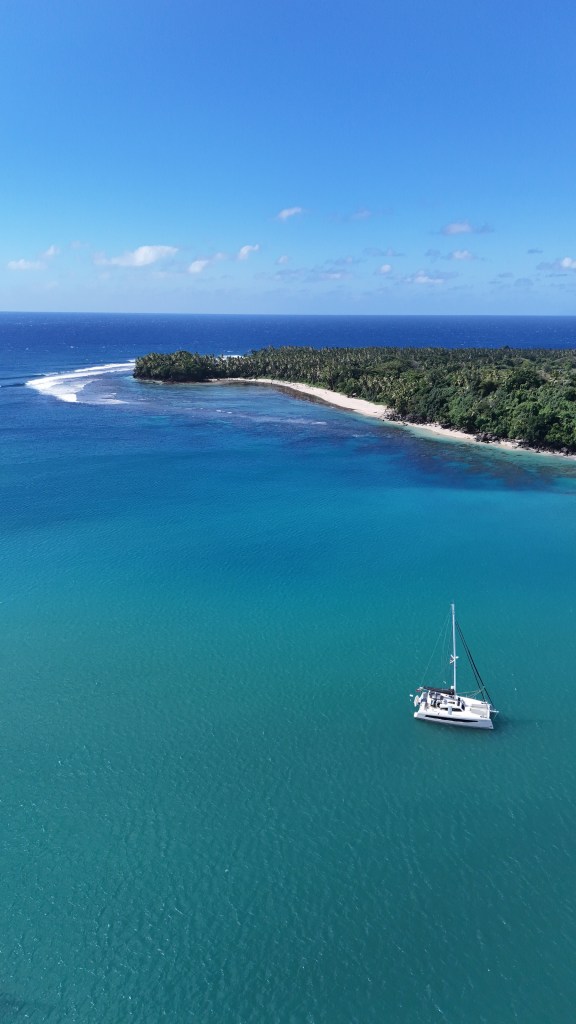
Seven days after leaving the Gold Coast’s skyscrapers and glittery holiday scene, we motored into Port Resolution, a bay with lush green jungle vegetation covering steep cliffsides. Local fishermen in outrigger canoes cast their nets around our boat and gave us friendly nods whilst we picked our anchoring spot in the bay. From the shore the smell of warm humid soil reached our cockpit and as soon as we turned the motors off we heard laughter from kids playing on the beach whilst their mothers watched from under an enormous bayan tree. From a distance it seemed like paradise on earth but also something so remote and foreign that we could not really imagine ourselves being part of it.
The following day, after being cleared by immigration and customs we hoisted our Vanuatuan guest flag and later walked around the village. Everyone smiled and waved to us or came up and shook our hands and told us their name. An elderly woman gifted us bananas, a group of kids offered us grapefruits and giggled with delight when we asked if we could take photos of them. The uneasy feeling of having landed in such a remote place which gripped me as we first arrived started to wear off. Yes, what if the electricity onboard failed and we would have no drinking water or communication and yes, what if we have a serious injury and we were 150 nm from the capital Port Vila , and Air Vanuatu has gone out of business so there are no flights… Yet as fragile as it all seemed, meeting such friendly and welcoming faces made me feel as if I didn’t need anything else to have a wonderful time here in the middle of the South Pacific, 2500 km from home.
We had prepared for months to be ready for anything an ocean passage could throw at us, except for not being able to enter at our destination. Thanks to the rally and Viki’s constant support it was possible to regroup, submit paperwork and follow plan B. What I hadn’t prepared for though was the lack of opportunities for provisioning for fresh proteins and vegetables. As the French supermarkets were no longer an option, we took a very bumpy three-hour ride in the back of a pick-up to an ATM machine in the only town on the island and visited the local market. But the only thing I found there which I understood how to cook was spring onions and bananas. The roots, the coconuts, the exotic looking green leaves were too foreign to me. Luckily, I spotted a local fisherman with a load of huge yellowfin tunas and I managed to purchase one from him. Later we found that you can barter bananas, grapefruit and cucumbers for fishing hooks and clothes at almost every anchorage and I changed the menu on board to what was available: fried bananas have quickly become a new favourite and we fished plenty of wahoo and yellowfish tuna and discovered fresh organic meat in Port Vila’s supermarkets.
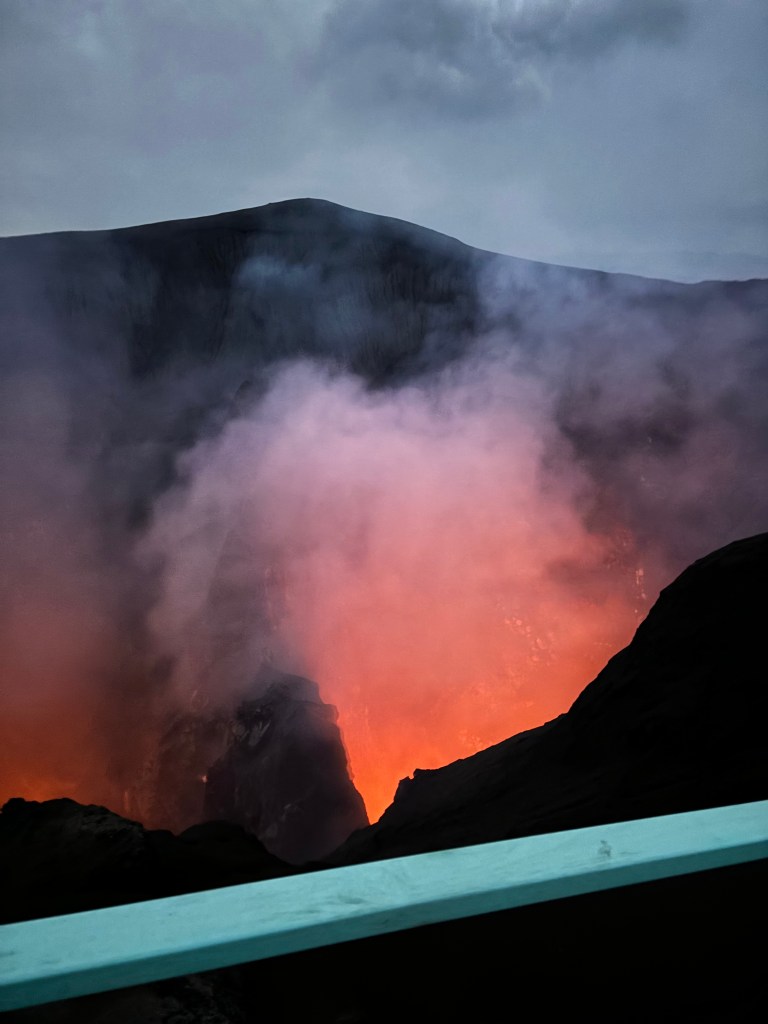
Behind the bay of Port Resolution, lies Mt Yasur, a live volcano which you can visit if you dare. In some wind conditions ashes fall on the boats at anchor in the bay. Standing at the rim of the crater with only an improvised rickety fence, feeling the thunder in my bones as the volcano spewed red hot lava over our heads was a little too close for comfort, in my opinion.
I was relieved when we left the glowing volcano behind us and sailed north towards the more than 80 islands of Vanuatu. Navionics charts seem accurate enough but with Star link you can always double check with satellite imagery. We also use the Rocket Cruising Guide and Zulu app and found beautiful and protected anchorages on every island we have visited. The prevailing winds are SE-trades, but we also experienced several days with no wind and cloudy skies which brought our batteries to their knees. You can never have enough solar power. We don’t have a generator, but we have 1600 watts of solar panels on our coach house and 800 AH of lithium batteries. If there is sun, we run our water maker, washing machine and bread maker as often as we like but when it gets cloudy, we have a problem. In the end I had to have a serious talk to my husband and kindly ask him when we met new sailors not to mention then B-word (batteries), because once they get started on the topic they can go on for hours…..
Every island we have been to has offered unique experiences. Swimming with dugongs in the Maskelyne Islands, the Rom-mask dance and chief grading ceremony on Ambryon, land diving on Pentecost, canoeing to the stunning blue water holes on Espiritu Santo, visiting remote villages where the chiefs welcome us and ask for help to fix their generator or solar panels and everywhere we were gifted with fruit and vegetables and friendly smiles.
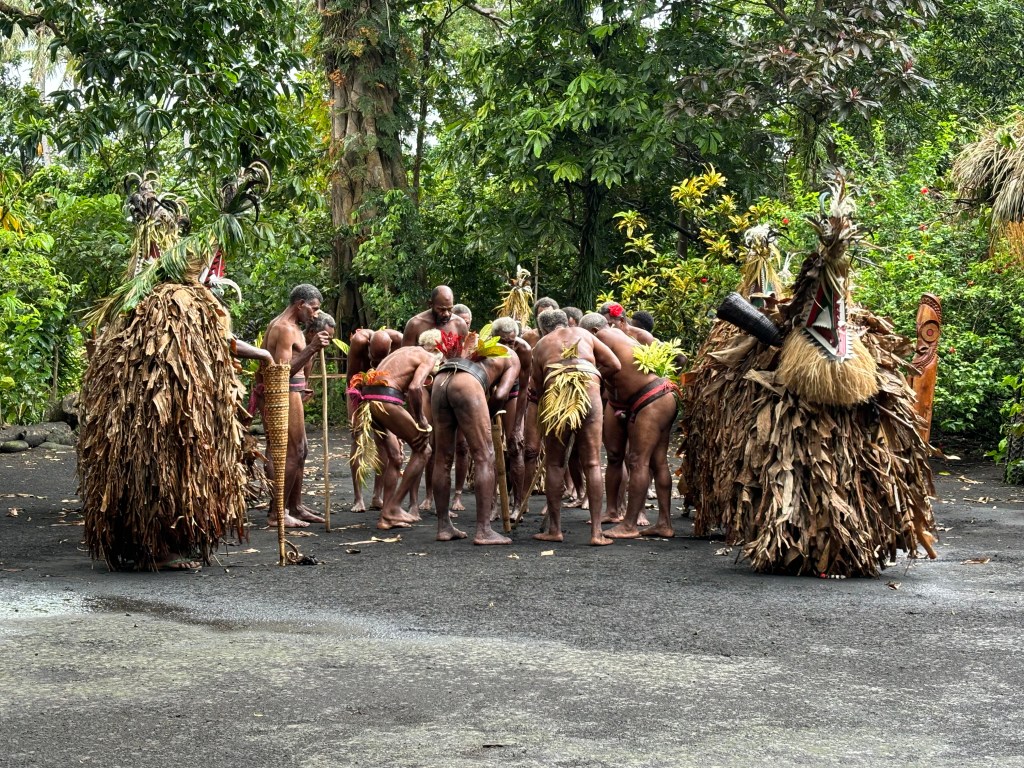
Never in my wildest dreams did I think I would find a world like the one my childhood hero visited so many years ago, but arriving here in Vanuatu on our boat made me realize there are still places which have kept their magic. I’m not sure for how much longer we will be able to experience cultures like the Melanesian because all the young people have phones and they seem glued to them as anywhere else in the world. I wonder, are they watching their elders, are they learning from them or are they dreaming of living in the world the phone brings to them? I would say hurry out here and don’t rush through this magical place, there is so much to see. We never planned to sail to Vanuatu but I’m so glad we did. The welcoming and friendly people we have met made our visit an adventure of a lifetime.
Published in Yachting World 2025
Subscribe
Subscribe to get the latest stories in your inbox.


Leave a Reply